Human emissions of greenhouse gases aren't slowing down, in fact, they’re speeding up. In recent years, more attention has been put on what should be done with the carbon dioxide that is currently being released. But what can we do with all of the CO2 besides release it into the atmosphere? The answer to this pressing question may lie hidden beneath our feet.
Carbon sequestration is the practice of capturing and storing carbon dioxide from the atmosphere. One form of CCS (Carbon Capture and Storage) is known as carbon mineralization. In this process, carbon dioxide reacts with certain types of rocks, normally igneous or metamorphic, and becomes a carbonate. This permanently traps the carbon in rocks, unable to escape into the atmosphere and act as a greenhouse gas. There are two primary methods of carbon mineralization.

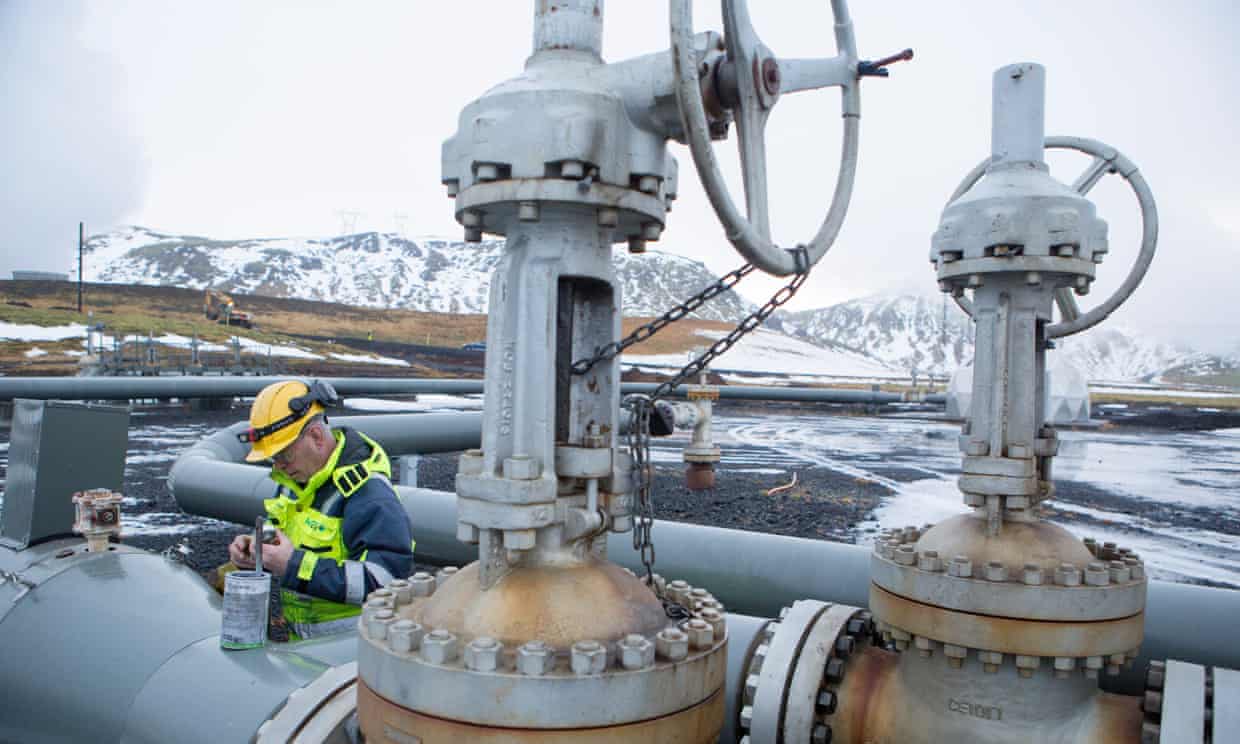
Carbon injection pumps carbon dioxide into wells that lead to igneous and metamorphic rock deposits. There, they can be mineralized by interacting with two types of rock, basalt and ultramafic. Ultramafic rocks have high amounts of iron and magnesium, and are capable of mineralizing CO2 in under two years. Carbon injection was proven effective in Iceland in 2013. The Orca geothermal power plant captured its own carbon dioxide emissions, mixed them with water, and pumped them into the volcanic basalt rock below. The experiment injected 175 tons of CO2 into the ground, and found that 95% of the gas had mineralized into carbonate within two years (Hirji, 2016). The success Orca found proves that the technology is ready, but carbon mineralization still must prove it is safe and cost-effective before policymakers begin to consider implementing it.
Carbon can also be mineralized by exposure to basalt and ultramafic rocks at the surface. These often come in the form of crushed mining waste. This process is faster than injection, but has a lower overall capability for carbon storage due to the difference in quantity of rock above ground versus underground. This method is being utilized on the rocks of the Oman Gulf, but has been described as only “a drop in the bucket” (Fountain, 2018).
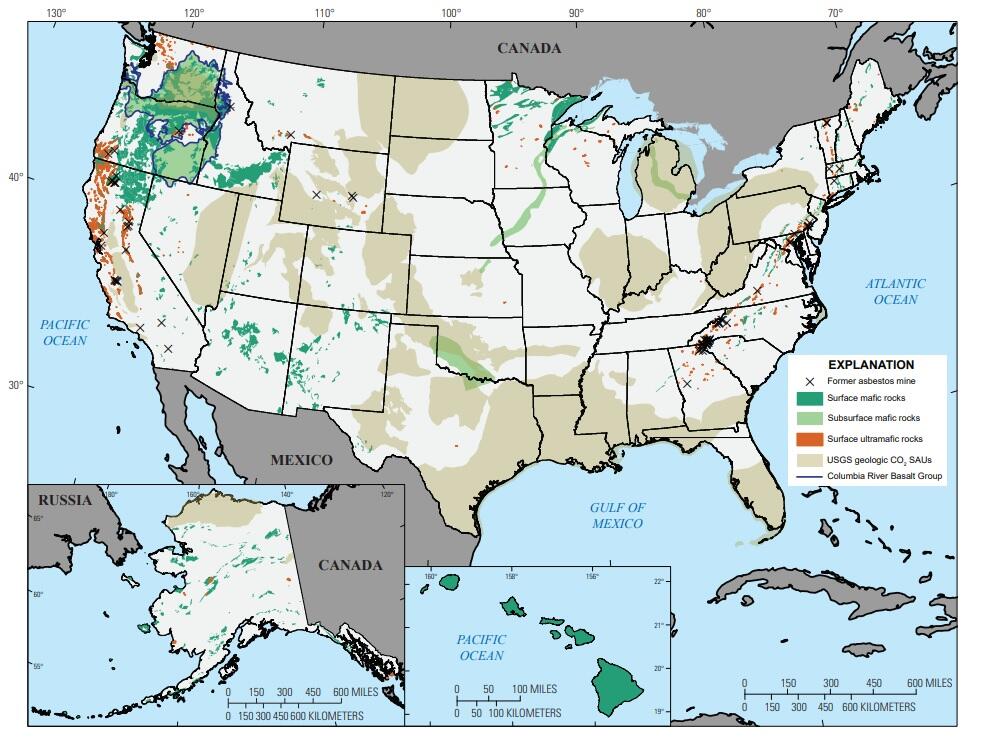
Carbon mineralization is currently being utilized in only a few places around the world, but it’s a good step in the right direction. We have a long way to go before it even begins to have a notable effect on CO2 emissions, but the future looks promising for this form of carbon capture.
Citations:
Fountain, Henry. “How Oman's Rocks Could Help Save the Planet.” The New York Times, The New York Times, 27 Apr. 2018, https://www.nytimes.com/interactive/2018/04/26/climate/oman-rocks.html.
Hirji, Zahra. “Iceland Experiment Successfully Turns CO2 Emissions into Rock.” Inside Climate News, 22 July 2022, https://insideclimatenews.org/news/09062016/iceland-study-ccs-carbon-capture-storage-climate-change-iceland-co2-rock/.
US Geological Survey. “Making Minerals-How Growing Rocks Can Help Reduce Carbon Emissions: U.S. Geological Survey.” Making Minerals-How Growing Rocks Can Help Reduce Carbon Emissions | U.S. Geological Survey, 8 Mar. 2019, https://www.usgs.gov/news/featured-story/making-minerals-how-growing-rocks-can-help-reduce-carbon-emissions#:~:text=Carbon%20mineralization%20is%20the%20process,escape%20back%20to%20the%20atmosphere.

No comments:
Post a Comment